All Categories
Featured
Table of Contents
- – Adjusting to Content Realities in 2026
- – The Mechanics of Verification in 2026
- – Integrating Site & Page Builder into Modern W...
- – The Financial Effect of Content Quality
- – Technical Obstacles in Content Filtering
- – Human Oversight in an Automated World
- – The Future of Intent-Based Positioning
- – Summary of Method for 2026
Adjusting to Content Realities in 2026
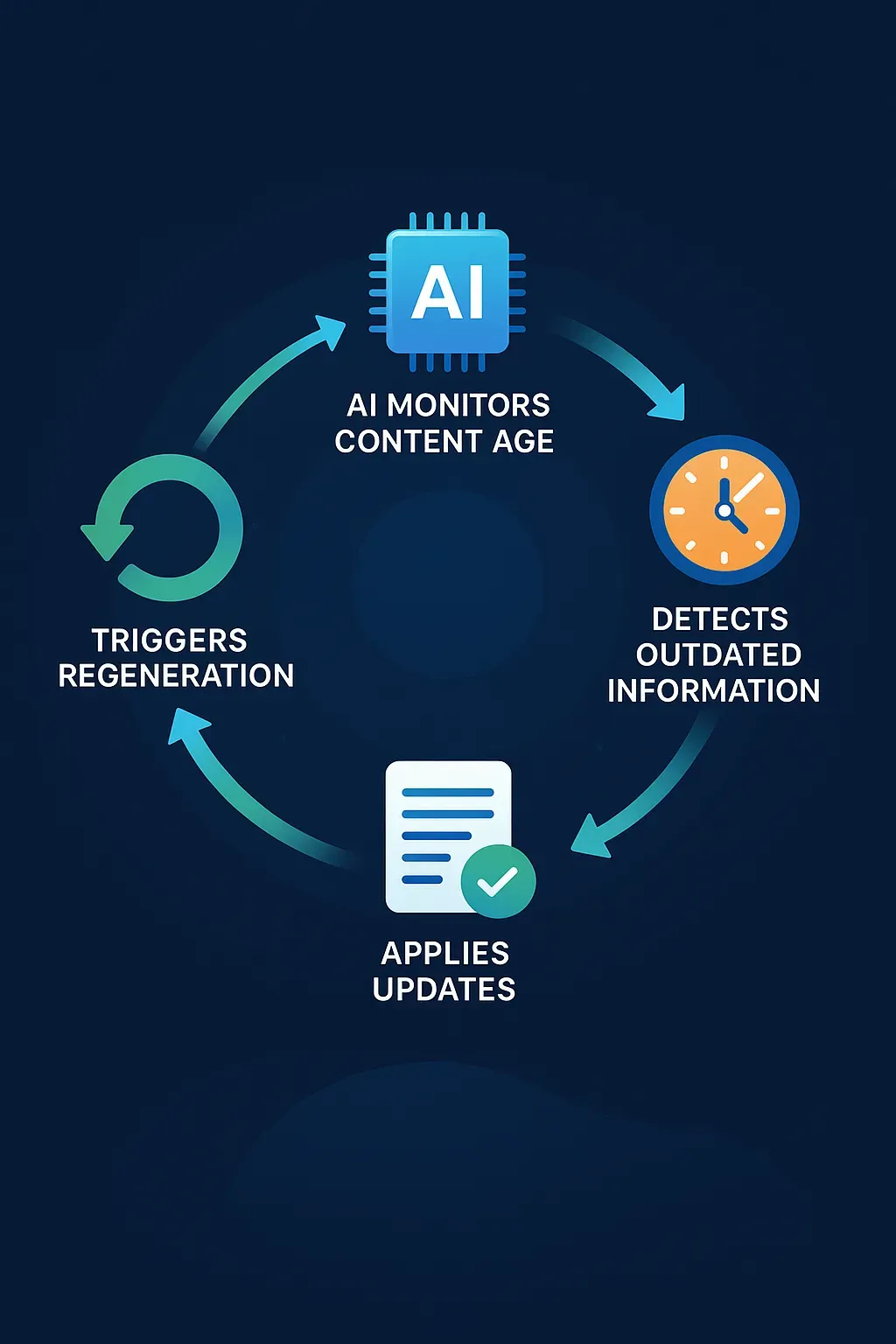
Programmatic marketing in 2026 functions within an environment defined by extreme scrutiny. The days when marketers merely chased the most affordable cost-per-thousand impressions have disappeared. Today, the concern has actually moved towards the stability of the environment where those impressions take place. High-frequency bidding systems now process more than simply cost and audience data; they examine the semantic worth of the page in genuine time. This change stems from a saturation of low-value, AI-generated pages that flooded the web over the previous 3 years.Advertisers are discovering that standard blacklists and whitelists are no longer adequate. These fixed tools can not keep speed with the countless new URLs produced daily by automated systems. Instead, the industry has turned toward a model of continuous confirmation. This involves checking the quality of the composed word and the energy of the info offered to the user. When a programmatic network stops working to maintain these standards, the resulting drop in engagement is instant and costly.Maintaining a high requirement requires a concentrate on actual value. Buyers are searching for signals that indicate a human was included in the editorial procedure or that the automated systems utilized were supervised by rigorous quality standards. The integration of Site & Page Builder helps bridge this gap, making sure that automated positionings take place just on pages that fulfill specific readability and trust thresholds. Without these guardrails, brands run the risk of being connected with the misinformation and "slop" content that still persists in the dark corners of the web.
The Mechanics of Verification in 2026
How does a network validate quality at the speed of a millisecond auction? In 2026, the answer lies in decentralized verification nodes. These nodes examine the structure of a website, the depth of its content, and its historical performance before a single bid is placed. It is no longer enough for a site to look legitimate. It must prove its worth through consistent user interaction and a lack of aggressive, layout-breaking ad units.The increase of "Made For Advertising" websites, understood as MFAs, reached a snapping point in 2025. These websites utilized to use thin material to tempt programmatic invest. In 2026, the networks have actually upgraded their protocols to identify the particular footprints of these operations. This includes tracking for unexpected spikes in traffic from suspicious sources and analyzing the ratio of text to marketing space.Success in this sector often depends upon high-level knowledge in Drag-and-Drop SEO Design to make sure that signals remain tidy and actionable. When a network focuses on these technical criteria, it safeguards the marketer from squandering budget plan on invisible or low-impact positionings. The focus has actually moved from "how lots of people saw this" to "what sort of environment did they see it in." This distinction is what separates rewarding networks from those that are gradually losing their customer base.
Integrating Site & Page Builder into Modern Workflows
Operational efficiency in 2026 counts on the capability to filter out noise. Many networks now use Site & Page Builder to manage the heavy lifting of website auditing. This enables human editors to concentrate on the nuance of high-value partnerships rather than by hand examining countless small blogs. This mix of machine speed and human judgment has actually become the requirement for any network claiming to use premium inventory.The innovation behind these filters has actually become significantly more advanced. In 2026, these systems can identify between a well-researched short article and a generic summary developed exclusively for search engine presence. They search for original data, distinct quotes, and a rational flow of information. If the content feels repetitive or does not have a clear point, the automated systems flag it for exclusion from the premium bidding pool.
The Financial Effect of Content Quality

There is a direct connection in between the quality of a site's content and the cost advertisers are prepared to pay. In the current 2026 market, premium publishers are seeing their rates climb up since they offer something uncommon: a safe and engaging environment. Meanwhile, networks that permit their stock to be watered down with bad material are seeing a massive "flight to quality." This shift has changed the conversation in between agencies and networks. The focus is now on openness. Agencies wish to see the audit logs of the sites consisted of in a buy. They need to know that the material is being kept track of not simply for keywords, however for belief and precision. Investing in Automated Custom Parameter Content Tools has actually ended up being a prerequisite for keeping brand safety in high-velocity bidding environments. This investment ensures that the programmatic method stays viable even as customer hesitation toward online advertising grows.When a brand's message appears beside a top quality piece of journalism or a practical tutorial, the "halo effect" is quantifiable. Users are more most likely to trust the advertisement because they rely on the surrounding material. Conversely, an advertisement appearing on a page filled with clickbait and broken links experiences a trust deficit that is almost difficult to get rid of.
Technical Obstacles in Content Filtering
In spite of the improvements seen in 2026, challenges remain. The most considerable hurdle is the "feline and mouse" game played in between quality filters and those attempting to game the programmatic system. As filters end up being much better at recognizing low-grade text, those producing that text use more advanced approaches to mimic human composing patterns.This needs a multi-layered approach to defense. Modern networks do not count on a single metric. They take a look at a combination of elements:.
- Domain age and authority relative to the volume of content produced.
- The variety of the website's outgoing links.
- User dwell time and interaction rates compared to industry averages.
- The presence of clear authorship and contact information.
By triangulating these data points, networks can develop a "quality rating" for every page in their system. This score determines the floor cost for the inventory. Pages with low scores are either eliminated or sold in lower-tier auctions where the expectations for brand security are less stringent. This tiered system permits a more honest marketplace.The need for Drag-and-Drop SEO Design for Users continues to rise as companies search for methods to browse these intricacies. Having a partner who comprehends the technical underpinnings of these networks is essential for any brand that wishes to prevent the mistakes of the present digital market.
Human Oversight in an Automated World
While the heavy lifting of content analysis is done by software, the function of the human mediator has never been more crucial. In 2026, these professionals serve as the final court of appeal for publishers who feel they have actually been unjustly flagged by an algorithm. They likewise set the ethical and stylistic standards that the Site & Page Builder follow.This human aspect avoids the "sanitization" of the web. Without it, automated filters may unintentionally block high-quality material that happens to use questionable keywords or covers hard topics. A human-in-the-loop system guarantees that nuance is protected while still safeguarding advertisers from really harmful or ineffective content.Publishers have actually also had to adjust. They are moving far from high-volume, low-effort production designs. Rather, they are focusing on building communities. A site with a faithful, returning audience is much more important in a programmatic network than a site that relies on one-off clicks from social networks. This return to audience-centric publishing is maybe the most favorable result of the quality crisis of the early 2020s.
The Future of Intent-Based Positioning
_1736257115.jpg)
Looking ahead from 2026, the focus is shifting towards "intent-based" quality. This suggests examining whether a page in fact pleases the factor a user arrived there. If a user look for an option to an issue and the page offers a clear, succinct answer, that page is thought about high quality, even if it is short. If the page is long but stops working to respond to the concern, it is flagged as low quality.This level of analysis needs a deep understanding of natural language. The programmatic networks of 2026 are progressively utilizing semantic designs that can map the "understanding graph" of a page. They can tell if an author is an expert in their field or if they are simply rephrasing information found somewhere else. This makes sure that budget plans are directed toward the creators who are actually adding worth to the web.
Summary of Method for 2026
To keep content quality in a programmatic network, the method needs to be proactive rather than reactive. It begins with an extensive onboarding procedure for publishers and continues with continuous tracking of every page where an ad may serve. Using Site & Page Builder provides the scale essential to manage countless impressions, while human oversight provides the needed context.Advertisers should likewise take responsibility by demanding greater requirements from their network partners. By declining to bid on inventory that does not fulfill clear quality benchmarks, they provide the financial incentive for the entire system to improve. In 2026, the winners are those who acknowledge that the context of an advertisement is just as essential as the person seeing it. The period of amount at any cost is over, changed by a more fully grown, quality-driven programmatic marketplace.As the industry moves forward, the combination of these top-level confirmation steps will end up being much more seamless. The goal is a digital area where brands can reach their audience with overall confidence, knowing that their messages are supported by material that is accurate, valuable, and human-verified. This dedication to quality is the only method to guarantee the long-lasting health of the programmatic sector.

Table of Contents
- – Adjusting to Content Realities in 2026
- – The Mechanics of Verification in 2026
- – Integrating Site & Page Builder into Modern W...
- – The Financial Effect of Content Quality
- – Technical Obstacles in Content Filtering
- – Human Oversight in an Automated World
- – The Future of Intent-Based Positioning
- – Summary of Method for 2026
Latest Posts
Bridging the Space In Between Quality and Automation
How Site & Page Builder Scale Material in 2026
How to Scale a Material Company in the AI Era
Latest Posts
Bridging the Space In Between Quality and Automation
How Site & Page Builder Scale Material in 2026
How to Scale a Material Company in the AI Era