All Categories
Featured
Table of Contents
- – Material Method Advancement in 2026
- – The Technical Failure of Standard Post Spinning
- – Specifying Generative Creativity in 2026
- – The Shift Toward Information Gain
- – Strategic Application of Data-Driven Content
- – User Experience and Trust Signals
- – Handling Programmatic Danger
- – Adjusting to the Future of Browse
- – Technical Accuracy and Fact-Checking
- – The Role of Human Oversight
- – Final Thoughts on Content Strength

Material Method Advancement in 2026
The distinction in between automatic rephrasing and real content creation has actually ended up being the defining line for digital exposure in 2026. 5 years back, many publishers depended on tools that switched synonyms or restructured sentences to bypass plagiarism filters. Those methods, commonly referred to as short article spinning, have largely stopped working to keep speed with the sophisticated pattern acknowledgment used by online search engine today. Modern systems now try to find semantic depth and distinct information points rather than simply inspecting if a sentence is technically various from another.Programmatic material methods in 2026 focus on synthesis rather than re-expression. While spinning was a linguistic technique, generative creativity is a data-driven process. The objective for any long-term digital existence is to produce pages that offer particular utility, which frequently needs a deep connection to real-world information or exclusive insights. Business that continue to rely on older rephrasing methods find their pages ignored by discovery algorithms that prioritize information gain.
The Technical Failure of Standard Post Spinning
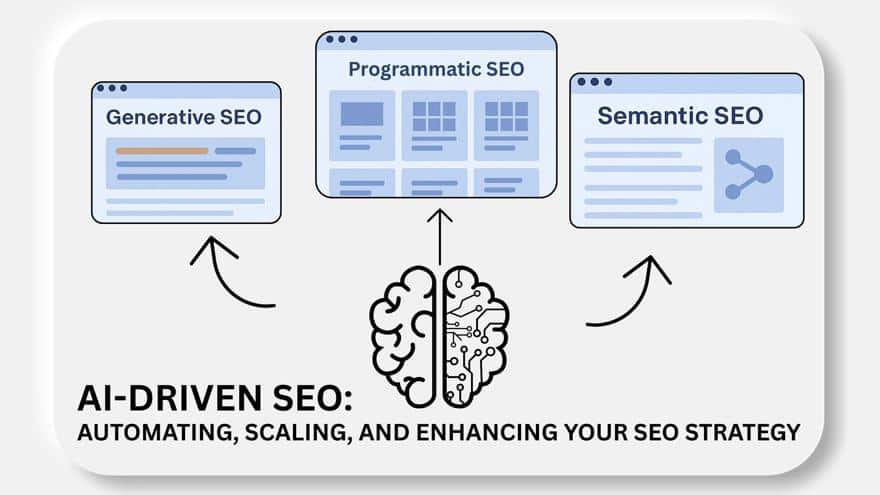
Traditional spinning dealt with the presumption that if the words were different, the content was initial. In 2026, this assumption is outdated. Browse engines now map the intent and knowledge chart of a piece of writing. If an article about automated data systems includes the exact same accurate progression and logical structure as ten other short articles, it is flagged as low-value duplication, despite the specific vocabulary used.Spinning tools typically develop "word salad" that, while grammatically proper, lacks a human-centric logical flow. These tools struggle with subtlety, frequently choosing synonyms that technically fit the dictionary meaning but fail the contextual test. A tool might replace "quick" with "fleet," which sounds abnormal in a technical discussion about server speeds. This lack of stylistic coherence signals to both readers and algorithms that the content was not crafted with care. Preserving an one-upmanship requires approaching Automated Search Campaigns that prioritizes structural individuality.
Specifying Generative Creativity in 2026
Generative originality does not mean a human needs to compose every word from scratch. Instead, it refers to the process of utilizing artificial intelligence to synthesize brand-new perspectives based upon raw information. In 2026, this normally includes feeding an AI design specific criteria, such as localized pricing, existing weather patterns, or real-time inventory levels, to develop a story that has never ever existed before.This method makes sure that every page serves a purpose. For instance, a programmatic rollout of 500 city-specific pages must do more than just swap the city name. It must evaluate the particular demographics or requirements of the local service area and adjust the suggestions appropriately. This level of modification is what separates a high-performing site from a graveyard of spun short articles. By focusing on these specific information layers, publishers create a defense against future algorithm updates that target generic, recurring text.
The Shift Toward Information Gain
Info gain has actually ended up being the most crucial metric for content quality in 2026. This principle measures just how much new information a page provides compared to what is currently offered on the internet. A spun post, by meaning, offers zero details gain due to the fact that it is simply a mirror of an existing source. Generative initial material, nevertheless, can achieve high information gain by combining disparate information sets or providing a fresh analysis of existing trends.Many companies are now turning to Long-Term Bulk Site Sustainability Models to ensure their digital footprint remains pertinent. This involves building content architectures where the AI is tasked with "thinking" through a set of truths instead of simply rewriting a source text. When a system is given a set of distinct information points, the resulting output is naturally original due to the fact that the underlying structure is distinct. This shift from "writing" to "synthesis" is the core of future-proof programmatic SEO.
Strategic Application of Data-Driven Content
Future-proofing a material technique requires a shift in how resources are assigned. Instead of employing groups to "repair" spun text, organizations are buying information engineers and timely designers. These specialists develop the pipelines that feed original info into generative designs. The outcome is a stream of material that feels authoritative and particular to the user's needs.Implementing a sophisticated content pipeline enables for scale without the danger of being penalized for "thin" material. Thin material is no longer specified by word count, however by the absence of initial thought or data. A 300-word page that answers a very specific, data-backed inquiry is now better than a 2,000-word spun article that states absolutely nothing new. The focus is on the quality of the inputs, as the output is only as excellent as the data it draws from.
User Experience and Trust Signals
In 2026, users have actually become proficient at identifying "AI-flavored" content that lacks substance. Spun short articles frequently feel hollow, causing high bounce rates and low engagement. When a user arrive at a page and recognizes it is just a reworked version of something they have already read, they lose trust in the brand name. This trust is difficult to regain.Generative originality enables for a more conversational and direct tone that resonates with human readers. By using particular examples and dealing with regional or specific niche concerns, the content establishes a sense of know-how. People are more likely to engage with Bulk Site Sustainability in 2026 when the information offered feels tailored to their particular scenario. This human-centric technique is essential for conversion rates, as search traffic is only helpful if it causes significant action.
Handling Programmatic Danger
The threat of relying on old-school spinning is not simply a loss of rankings; it is the potential for an overall website de-indexing. Search engines in 2026 are aggressive in removing clusters of low-quality, repeated content. To alleviate this threat, programmatic strategies should consist of "variation checks" that go beyond easy plagiarism scores. These checks compare the semantic structure of new pages against the existing index.An effective strategy involves creating a "moat" of initial information. This might be anything from exclusive survey results to unique mixes of public data sets. When the content is developed on this foundation, it ends up being challenging for competitors to duplicate. This originality is the ultimate future-proofing system. It ensures that even if AI models become more ubiquitous, the particular material produced by an organization stays a primary source of information.
Adjusting to the Future of Browse
Browse is no longer a list of blue links; it is a series of answers and suggestions frequently delivered via voice or chat interfaces. These user interfaces prioritize the most accurate and concise info. Spun content, with its propensity toward fluff and repeated phrasing, is rarely chosen as the "best" answer. Generative original material, which gets directly to the point utilizing specific information, is far much better matched for this environment.As we move further into 2026, the gap between those who utilize AI as a blunt instrument for spinning and those who use it as a tool for synthesis will continue to broaden. The focus should stay on the worth provided to the end-user. Whether that is through other digital tools, the goal is to develop something that would deserve checking out even if search engines did not exist.
Technical Accuracy and Fact-Checking
One major mistake of both spinning and early generative AI was the tendency to produce "hallucinations" or accurate errors. In 2026, advanced programmatic systems have actually integrated fact-checking layers that validate claims against relied on databases in real-time. This is another location where generative creativity shines over spinning. A spinning tool blindly replaces words, frequently altering the accurate significance of a sentence. A generative system connected to an information feed is grounded in reality.Accuracy is a crucial element of creativity. A page that provides correct, current info on industry-specific topics is inherently more original than a spun page that might be using outdated or somewhat modified realities. For businesses, the expense of a factual mistake on a programmatic page can be high, both in regards to legal liability and brand name credibility. Purchasing premium generative pipelines minimizes this threat substantially.
The Role of Human Oversight
While the heavy lifting is done by devices, human oversight remains an important part of a 2026 content strategy. The role of the editor has shifted from fixing grammar to confirming the "reasoning" and "vibe" of the material. Human beings ensure that the generative designs are remaining on brand which the data inputs are being interpreted correctly. This hybrid technique combines the speed of AI with the discernment of human judgment.This oversight is particularly important when handling sensitive subjects or complicated service offerings. A human can spot when a generative model has actually ended up being too repetitive or when the tone is slightly off for a specific audience. By preserving a thin layer of human review, business can ensure that their programmatic content feels deliberate and expert. This balance is the trademark of an advanced 2026 content operation.
Final Thoughts on Content Strength
The battle between spinning and originality is over, and originality has won. For those aiming to build a resistant programmatic strategy, the course forward includes a deep dedication to information and a rejection of the "shortcuts" that specified the early period of AI content. By concentrating on details gain, technical accuracy, and user utility, publishers can develop a digital existence that stands the test of time and algorithm modifications. The innovation of 2026 offers the tools to produce content at an extraordinary scale, but the responsibility for the quality and originality of that material stays with the strategists who deploy it. Keeping a focus on these core concepts ensures that material stays a possession instead of a liability.

Table of Contents
- – Material Method Advancement in 2026
- – The Technical Failure of Standard Post Spinning
- – Specifying Generative Creativity in 2026
- – The Shift Toward Information Gain
- – Strategic Application of Data-Driven Content
- – User Experience and Trust Signals
- – Handling Programmatic Danger
- – Adjusting to the Future of Browse
- – Technical Accuracy and Fact-Checking
- – The Role of Human Oversight
- – Final Thoughts on Content Strength
Latest Posts
Bridging the Space In Between Quality and Automation
How Site & Page Builder Scale Material in 2026
How to Scale a Material Company in the AI Era
Latest Posts
Bridging the Space In Between Quality and Automation
How Site & Page Builder Scale Material in 2026
How to Scale a Material Company in the AI Era