All Categories
Featured
Table of Contents
Developing Stable Pipelines for High-Volume Output in 2026
Material operations in 2026 have moved past the initial enjoyment of basic text generation. Modern business now face the reality of handling 10s of thousands of pages that need to stay precise, contextually pertinent, and aligned with search engine expectations. The shift from manual prompting to advanced agentic workflows marks the defining trend of this year. These systems do not just write; they research, validate, and format data with a level of accuracy that was difficult to achieve just two years ago.
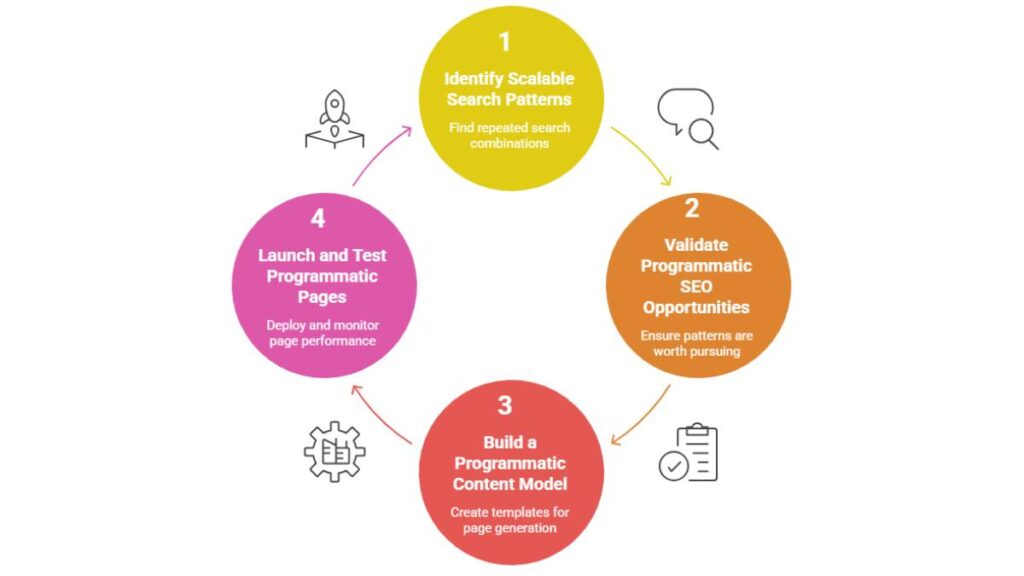
Success in these markets frequently depends upon having know-how in Graphical Linking Interface. Organizations that reward Large Language Designs (LLMs) as part of a broader software engineering issue rather than an innovative impulse are seeing the greatest returns. This involves structure pipelines where data from a particular Design Linking Visually feeds straight into specialized designs. Instead of a single prompt, a workflow might include six or seven distinct steps, each handled by a specialized representative charged with a narrow objective.
The Function of Multi-Agent Orchestration
The 2026 content design counts on orchestration. One agent might be accountable for drawing out raw data from a database, while a 2nd agent manufactures that information into a meaningful narrative. A 3rd representative then acts as a stringent editor, examining for accurate inconsistencies or adherence to a specific style guide. This separation of concerns prevents the "drift" frequently seen in long-form AI generation. By breaking the process into smaller components, groups can fix particular failures without discarding the whole output.
Many organizations discover that Advanced Graphical Linking Interface provides the needed scale for multi-region operations. When a business needs to create localized content for 5 hundred different cities, manual oversight is impossible. The workflow needs to be self-governing but protected by stringent validation layers. These layers use semantic contrast to guarantee the produced text matches the source information. If the Design Linking Visually updates a rate or a specification, the content pipeline immediately activates a refresh throughout all impacted pages.
Programmatic Data Injection and Contextual Precision
Programmatic material in 2026 is no longer about spinning variations of a single short article. It has to do with deep data injection. Every paragraph is developed around specific variables that change based on the target market or area. A review of a Design Linking Visually in one area might concentrate on various functions than an evaluation in another, based on local market trends and user behavior information. This level of granularity needs a tight integration between the content team and the data engineering group.
Premium output depends on Retrieval-Augmented Generation (RAG) By grounding the LLM in a personal understanding base, organizations remove the threat of hallucinations. The model is instructed to only utilize the offered truths, which may consist of technical documentation, regional business records, or real-time prices from a Design Linking Visually. This grounding ensures that even when producing countless words per minute, the system remains anchored to the reality. Groups typically search for Graphical Linking Interface for Experts when their internal capability strikes a ceiling.
Quality Control and Automated Fact-Checking
The enormous volume of material produced in 2026 has forced a change in how quality is determined. Human editors no longer read every word. Instead, they manage the "exception line." When the automated recognition agents flag a piece of content for a potential factual mistake or a tone mismatch, it is sent to a human for a decision. This enables a small group of 3 or four editors to supervise the production of thousands of articles each month without sacrificing the stability of the brand.
Automated fact-checking agents now utilize cross-referencing strategies. They take a generated claim and look for a matching data point in the primary Design Linking Visually. If the numbers do not line up, the material is turned down and sent out back for re-generation. This loop guarantees that the final output is typically more precise than content composed by people who might miss out on a decimal point or an upgraded figure. The speed of these checks has actually reached a point where material can be validated and published in seconds.
Future-Proofing Search Methods
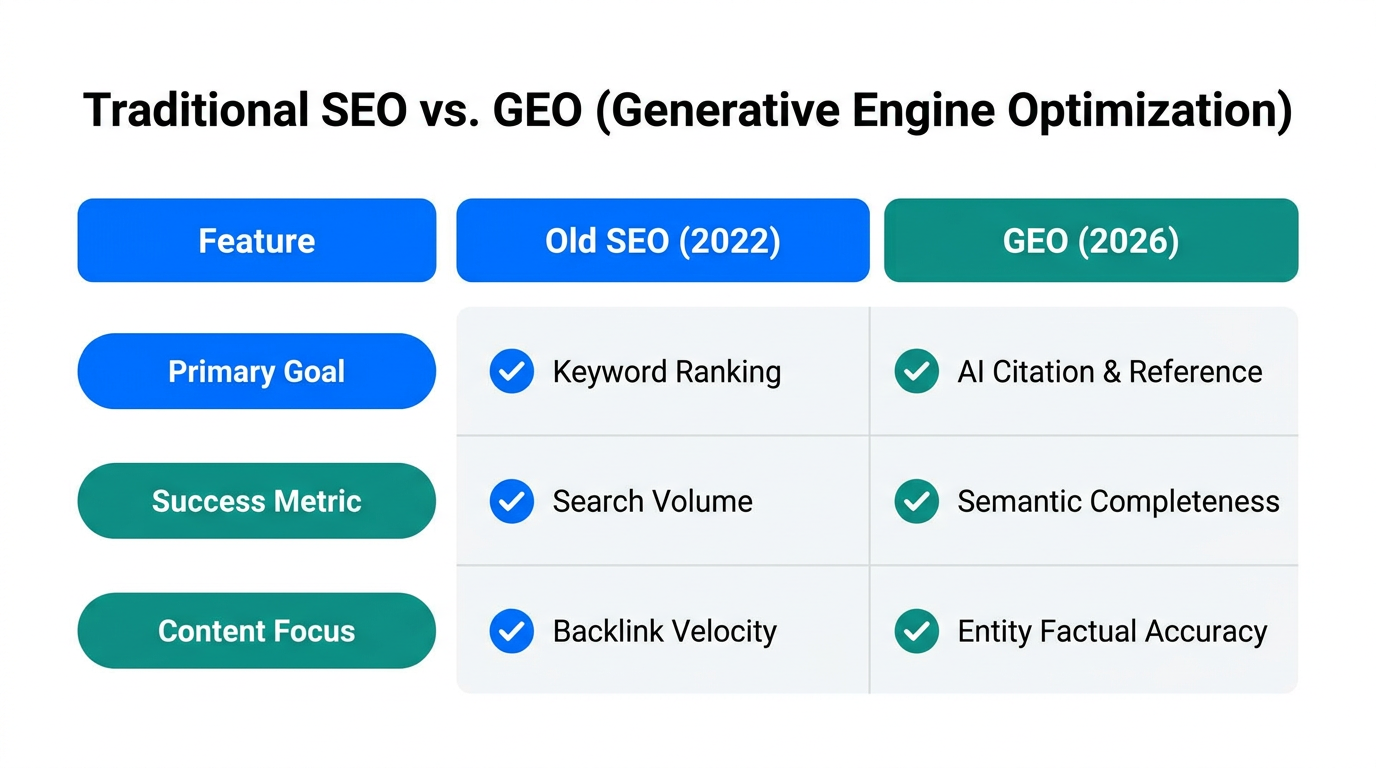
Online search engine in 2026 have actually become adept at identifying "empty" content. They focus on information that supplies real utility or distinct information points. Just having a lot of text is no longer a benefit. The programmatic methods that work today are those that synthesize intricate details into digestible formats. Tables, structured lists, and data-backed contrasts are highly valued. A page going over a Design Linking Visually must offer more than simply descriptions; it requires to use relative worth that a user can not discover somewhere else.
Content groups are also focusing on "semantic density." This involves making sure that every sentence contributes brand-new info rather than duplicating concepts in various methods. The 2026 technique prefers clearness and directness. By utilizing LLMs to summarize huge amounts of research into succinct guides, business can record the attention of users who are increasingly overwhelmed by information. The focus has moved from "how much can we compose" to "just how much value can we pack into this particular word count."
Integrating User Feedback Loops
The most innovative material pipelines now include a feedback loop from live user information. If a page generated for a specific Design Linking Visually programs low engagement or high bounce rates, the system evaluates the content against high-performing pages. It may determine that the tone is too official or that an essential piece of info is missing out on. The system then changes the prompt directions for that specific classification and regenerates the material to better fulfill user needs. This happens without manual intervention, permitting the material technique to develop in real-time.
This self-optimizing behavior is the peak of programmatic content in 2026. It deals with every piece of text as a live possession that can be improved based upon performance. When these systems are linked to a Design Linking Visually, the results are frequently superior to static, human-led strategies that take months to iterate. The ability to pivot the messaging of an entire site throughout 10 thousand pages in a single afternoon is a huge competitive advantage for those who have constructed the best infrastructure.
The Human Component in 2026 Material
While the heavy lifting is dealt with by makers, the technique is still driven by individuals. The role of the "Content Engineer" has changed the conventional "Copywriter." These specialists concentrate on developing the logic of the workflows, choosing the best models for particular tasks, and guaranteeing the data sources are tidy. They understand both the nuances of language and the constraints of the innovation. They spend their time looking at the Design Linking Visually instead of staring at a blank page.
The human touch is now reserved for high-stakes creative instructions and the definition of brand name voice. An LLM can follow a style guide completely, however a human should choose what that design should remain in the first location. Setting the instructions for a Design Linking Visually needs an understanding of the competitive market that models still struggle to comprehend in their totality. The balance of 2026 is discovered in using devices for the scale and humans for the soul of the content.
As the year progresses, the space between business utilizing fundamental AI and those using integrated agentic workflows will only expand. The cost of production continues to fall, but the worth of accurate, data-driven content stays high. By concentrating on steady pipelines and extensive validation, services can maintain a substantial presence in their particular markets without the overhead of conventional content houses. The focus stays on the output quality and the capability to adjust to new information as rapidly as it appears.

Latest Posts
Bridging the Space In Between Quality and Automation
How Site & Page Builder Scale Material in 2026
How to Scale a Material Company in the AI Era