All Categories
Featured
Table of Contents
- – Establishing Steady Pipelines for High-Volume ...
- – The Function of Multi-Agent Orchestration
- – Programmatic Data Injection and Contextual Pr...
- – Quality Control and Automated Fact-Checking
- – Future-Proofing Browse Techniques
- – Incorporating User Feedback Loops
- – The Human Component in 2026 Content
Establishing Steady Pipelines for High-Volume Output in 2026
Content operations in 2026 have actually moved past the initial excitement of basic text generation. Modern enterprises now deal with the truth of managing tens of thousands of pages that must stay accurate, contextually pertinent, and aligned with online search engine expectations. The shift from manual triggering to sophisticated agentic workflows marks the specifying trend of this year. These systems do not simply write; they research study, validate, and format information with a level of accuracy that was tough to achieve simply 2 years back.
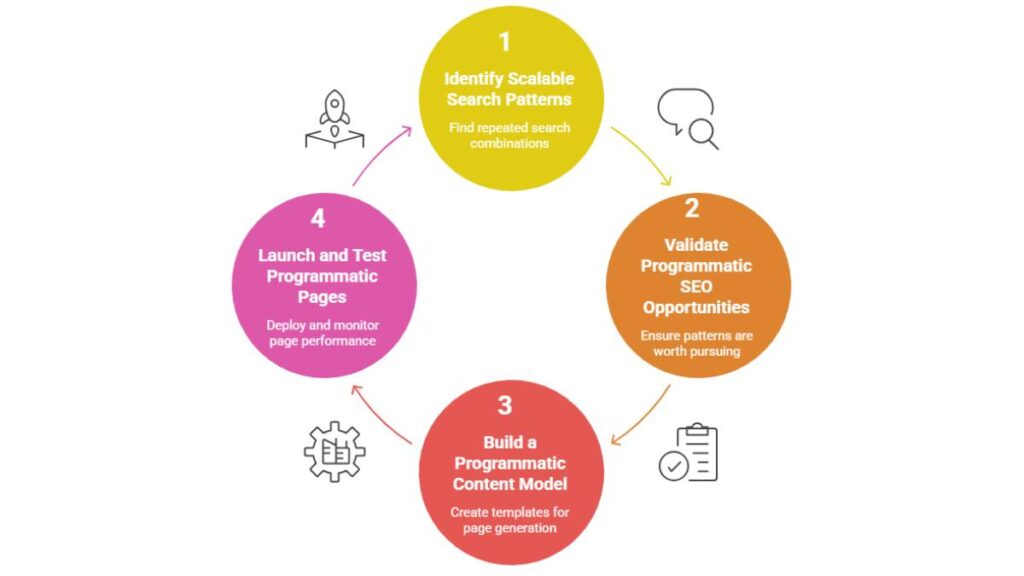
Success in these markets frequently depends on having proficiency in Mass Page Strategies. Organizations that reward Large Language Designs (LLMs) as part of a more comprehensive software engineering issue instead of an imaginative whim are seeing the highest returns. This involves structure pipelines where data from a specific automation service feeds straight into specialized designs. Instead of a single timely, a workflow might consist of six or 7 distinct actions, each managed by a specialized agent entrusted with a narrow goal.
The Function of Multi-Agent Orchestration
The 2026 material model depends on orchestration. One agent may be responsible for drawing out raw data from a database, while a 2nd representative synthesizes that information into a coherent narrative. A third representative then acts as a rigorous editor, inspecting for factual disparities or adherence to a specific style guide. This separation of issues avoids the "drift" typically seen in long-form AI generation. By breaking the procedure into smaller sized components, teams can troubleshoot specific failures without discarding the whole output.
Numerous organizations discover that Cutting-Edge Programmatic SEO Research provides the needed scale for multi-region operations. When a company needs to produce localized content for 5 hundred different cities, manual oversight is impossible. The workflow should be self-governing but safeguarded by strict recognition layers. These layers utilize semantic comparison to ensure the produced text matches the source data. If the core data source updates a price or a requirements, the content pipeline automatically sets off a refresh throughout all affected pages.
Programmatic Data Injection and Contextual Precision
Programmatic material in 2026 is no longer about spinning variations of a single short article. It has to do with deep data injection. Every paragraph is constructed around particular variables that change based on the target market or area. A review of a technical platform in one region may focus on various functions than a review in another, based upon regional market patterns and user behavior data. This level of granularity needs a tight integration in between the material team and the information engineering team.
Top quality output depends upon Retrieval-Augmented Generation (RAG) By grounding the LLM in a personal understanding base, services remove the risk of hallucinations. The design is advised to just use the offered realities, which might consist of technical documents, local service records, or real-time prices from a database. This grounding guarantees that even when producing countless words per minute, the system remains anchored to the fact. Groups usually search for Programmatic SEO Research for 2026 when their internal capacity strikes a ceiling.

Quality Control and Automated Fact-Checking
The massive volume of material produced in 2026 has actually forced a modification in how quality is measured. Human editors no longer read every word. Instead, they manage the "exception line." When the automated validation agents flag a piece of material for a possible factual error or a tone inequality, it is sent to a human for a last decision. This enables a little group of 3 or 4 editors to manage the production of countless articles monthly without compromising the integrity of the brand.
Automated fact-checking agents now utilize cross-referencing strategies. They take a generated claim and search for a corresponding data point in the primary record system. If the numbers do not line up, the content is declined and returned for re-generation. This loop ensures that the last output is frequently more accurate than material composed by people who may miss out on a decimal point or an updated figure. The speed of these checks has actually reached a point where content can be verified and released in seconds.
Future-Proofing Browse Techniques
Browse engines in 2026 have actually become skilled at recognizing "empty" material. They prioritize details that offers actual utility or special data points. Simply having a great deal of text is no longer a benefit. The programmatic methods that work today are those that synthesize intricate information into absorbable formats. Tables, structured lists, and data-backed contrasts are extremely valued. A page going over a specialized tool must provide more than simply descriptions; it requires to offer comparative value that a user can not discover in other places.
Content groups are also concentrating on "semantic density." This involves making sure that every sentence contributes new information rather than duplicating concepts in different ways. The 2026 technique favors clearness and directness. By utilizing LLMs to sum up vast quantities of research into succinct guides, business can record the attention of users who are progressively overloaded by information. The focus has moved from "just how much can we compose" to "how much value can we pack into this particular word count."
Incorporating User Feedback Loops
The most innovative material pipelines now consist of a feedback loop from live user data. If a page generated for a specific market niche programs low engagement or high bounce rates, the system evaluates the content against high-performing pages. It might determine that the tone is too official or that a key piece of information is missing. The system then adjusts the prompt guidelines for that specific category and regenerates the material to much better fulfill user requirements. This takes place without manual intervention, permitting the content strategy to develop in real-time.
This self-optimizing habits is the peak of programmatic material in 2026. It deals with every piece of text as a live asset that can be improved based upon efficiency. When these systems are connected to a analytics suite, the outcomes are typically exceptional to static, human-led methods that take months to repeat. The capability to pivot the messaging of an entire website across ten thousand pages in a single afternoon is a huge competitive advantage for those who have developed the right infrastructure.
The Human Component in 2026 Content
While the heavy lifting is handled by devices, the method is still driven by people. The role of the "Material Engineer" has actually replaced the traditional "Copywriter." These professionals focus on creating the reasoning of the workflows, picking the best designs for particular jobs, and guaranteeing the data sources are clean. They understand both the subtleties of language and the limitations of the innovation. They invest their time taking a look at the workflow performance rather than looking at a blank page.
The human touch is now reserved for high-stakes creative direction and the meaning of brand name voice. An LLM can follow a design guide perfectly, however a human must choose what that style must be in the top place. Setting the direction for a digital strategy needs an understanding of the competitive market that models still have a hard time to comprehend in their whole. The balance of 2026 is discovered in utilizing devices for the scale and humans for the soul of the material.
As the year advances, the gap between companies using standard AI and those using incorporated agentic workflows will just broaden. The cost of production continues to fall, but the worth of accurate, data-driven material stays high. By focusing on steady pipelines and rigorous recognition, companies can preserve a significant presence in their particular markets without the overhead of conventional content homes. The focus stays on the output quality and the capability to adapt to new data as rapidly as it appears.

Table of Contents
- – Establishing Steady Pipelines for High-Volume ...
- – The Function of Multi-Agent Orchestration
- – Programmatic Data Injection and Contextual Pr...
- – Quality Control and Automated Fact-Checking
- – Future-Proofing Browse Techniques
- – Incorporating User Feedback Loops
- – The Human Component in 2026 Content
Latest Posts
Bridging the Space In Between Quality and Automation
How Site & Page Builder Scale Material in 2026
How to Scale a Material Company in the AI Era
Latest Posts
Bridging the Space In Between Quality and Automation
How Site & Page Builder Scale Material in 2026
How to Scale a Material Company in the AI Era